Short answer: most NYC buildings end up with a mix. Physical keys still make sense for low-traffic doors that few people use. A keypad works for staff or service doors where a shared code is acceptable and easy to change. Key fobs or cards are usually the better fit for lobby and main entrance doors in multi-unit buildings, because each resident or employee gets their own credential and a lost fob can be turned off without rekeying the building. Metro Local Locksmith installs and services all three across Manhattan, including the Upper East Side, and the rest of NYC. Call (646) 450-6320 or email info@metrolocallocksmith.com.
Keys: simple, but hard to control once copies are out
- Good for: closets, mechanical rooms, roof doors, and doors only a super or a few staff use.
- The problem in multi-unit buildings: you rarely know how many copies exist. When a tenant moves out or a key is lost, the only real fix is a rekey or a new cylinder.
- High-security cylinders (for example Mul-T-Lock) limit unauthorized duplication. See High Security Mul-T-Lock.
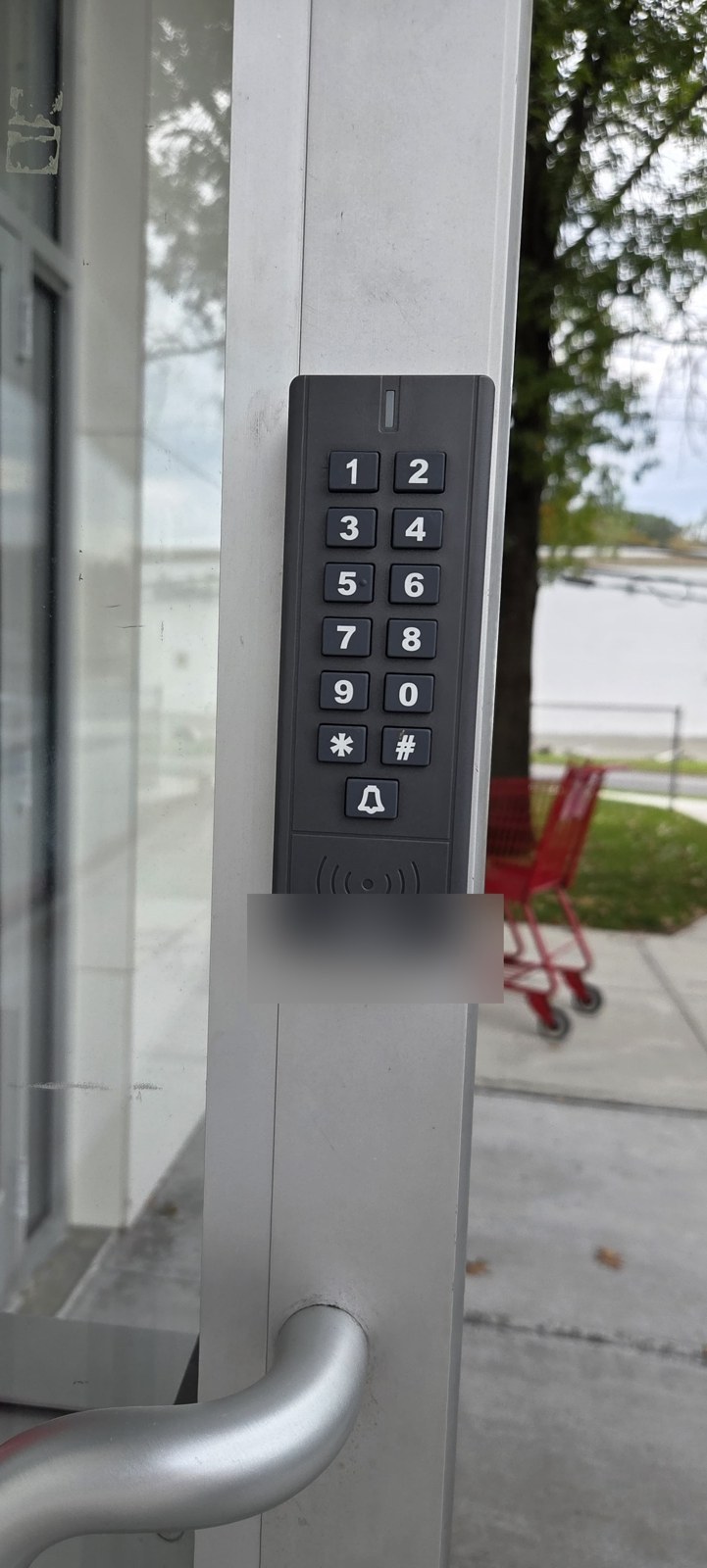
Keypads: no keys to hand out, but codes get shared
- Good for: staff entrances, service doors, small offices and storefront back doors.
- Upside: nothing to lose, and you change the code instead of rekeying.
- Downside: a code spreads. Plan to change it when staff turn over, and pick a backlit, weather-rated keypad for exterior doors.

Key fobs and cards: one credential per person
- Good for: lobby and vestibule doors, main entrances in co-ops, condos and rental buildings, and offices with turnover.
- Each person gets their own fob or card. When someone moves out or loses one, that credential is deactivated and everyone else keeps working.
- Fob readers often tie into the lobby intercom so residents can still buzz visitors in. See Intercom & Access Control Units.
What actually locks the door: maglock or electric strike
The reader or keypad only sends the signal. The door is held by one of two things:
- Maglock (magnetic lock): mounted on the header, holds the door with magnetic force while powered. Common on glass and aluminum doors.
- Electric strike: replaces the strike in the frame and releases the latch on a signal. Common where the door already has a good latch or lockset.
Which one fits depends on the door and the frame. It also matters what happens in a power outage: a maglock releases when power is lost, while electric strikes are typically fail-secure, so the strike stays locked and the door can still be opened with the mechanical override cylinder (key). We usually don’t install battery backup. Details on our maglock and electric strike installation and repair page.


Don’t forget the way out
Access-controlled doors need a reliable way to exit, such as a push-to-exit button, a motion sensor, or exit hardware on the inside. Exit and egress rules come from NYC building and fire codes and vary by door and building, so confirm requirements for your property before work.

The door has to be ready too
An electronic lock on a sagging metal door or a worn closer will fail. Before adding a reader, we check that the door closes and latches on its own, the frame is square and the hinges are solid. See NYC Ironwork, Metal Doors & Gates and our winter building entrance checklist.
Planning an upgrade with Metro
- Tell us the building address, which doors, and what you use today (keys, keypad, audio/video intercom, brand if known).
- We look at the doors, frames, wiring path and how the building runs day to day.
- You get options, for example a keypad on the service door and fobs on the lobby, and we schedule around residents, tenants and deliveries.
Managing several buildings? See Property Managers & Building Accounts and Commercial Locksmith.
We provide free on-site estimates for intercom and access control. Call (646) 450-6320 or email info@metrolocallocksmith.com.
FAQ
Can you add key fob entry to our existing lobby door?
Often, yes. It depends on the door, the frame and whether there is a workable wiring path to the reader and lock. We check that on site before quoting.
What happens to a fob- or keypad-controlled door if the power goes out?
We usually don’t install battery backup. Electric strikes are typically fail-secure, which means that with no power the strike stays locked, and the door can still be opened with the mechanical override cylinder (key). A maglock behaves differently, because it releases when power is lost, so the right hardware is chosen door by door with code requirements in mind.
Does a fob system replace our intercom?
No. Many buildings keep the intercom for visitors and add fob readers for residents and staff. We can connect both to the same door release.
A tenant moved out with a fob. Do we need to rekey?
Usually not. Deactivate that fob in the system. Rekey only the doors that still use physical keys.
Do you work on Comelit systems?
Yes. Metro installs and repairs Comelit intercoms and access control, as well as other audio and video systems.
How much does it cost?
It depends on the door and the system, so call (646) 450-6320 for a quote. We provide free on-site estimates for intercom and access control. A full remote-controlled access system is more complex and more expensive than a stand-alone keypad.